Equipment: Match the Signal Chain
Spending thousands on a vintage tube microphone paired with an uncalibrated room and a noisy preamp creates frustration. Audio gear must be chosen as a balanced ecosystem, where no single component bottlenecks the others.
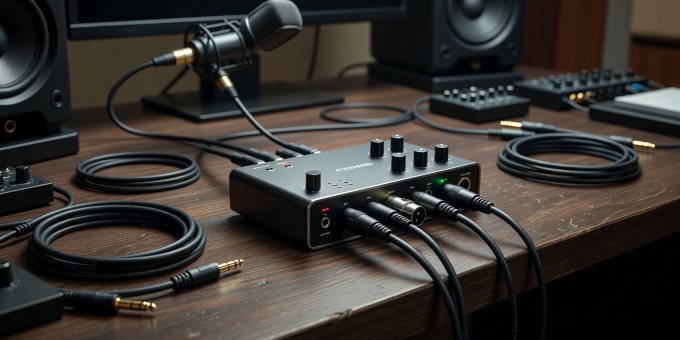
1. The Science of Digital Gain Staging
In the era of 24-bit recording, you do not need to track hot signals near 0 dBFS. In 24-bit fixed digital audio, your system offers over 144 dB of dynamic range. Tracking close to 0 dBFS only leaves you vulnerable to harsh analog preamp distortion and inter-sample clipping during reconstruction filtering.
The Golden Standard: -18 dBFS Nominal Target
Calibrate your interface preamp so regular speech and singing averages between -18 dBFS and -14 dBFS on DAW channel meters. When the vocalist shouts or belts, peak spikes should not exceed -10 dBFS. This preserves 10 full decibels of safety headroom.
2. Microphone Matching: Dynamic vs Condenser
One of the most frequent mistakes made by home producers is assuming condenser microphones are universally better than dynamic models. High sensitivity is a liability in an untreated environment.
| Microphone Class | Typical Sensitivity | Best Use Case | Untreated Room Rating |
|---|---|---|---|
| Large Diaphragm Condenser | 20 – 35 mV/Pa | Intricate lead vocals, acoustic guitar, quiet percussion | Demanding (picks up room reverb) |
| Broadcast Dynamic | 1.1 – 1.6 mV/Pa | Loud vocals, aggressive rap, podcast, untreated rooms | Exceptional (natural rear/side rejection) |
| Small Diaphragm Pencil | 10 – 15 mV/Pa | Cymbals, acoustic strings, realistic room capture | Moderate (detailed off-axis response) |
| Ribbon Transducer | 1.5 – 2.5 mV/Pa | Harsh brass, electric guitar cabs, vintage vocal tone | Requires clean high-gain preamp (>60 dB) |
3. Audio Interface Specifications That Actually Matter
When comparing interfaces from Focusrite, Motu, Universal Audio, Audient, or SSL, look past marketing claims of "192 kHz resolution" (which is unnecessary for music distribution and consumes double the storage and processing bandwidth). Evaluate these critical metrics instead:
Look for an EIN rating of -128 dBu or quieter (at 150-ohm termination). If you intend to use low-output dynamic mics like the Shure SM7B without an inline booster (like a Cloudlifter), high EIN ensures you can push preamp gain to +55 dB without introducing audible hiss.
Modern mid-tier units provide 115 dB to 120 dB of dynamic range on input conversion. This is plenty of clarity for commercial tracking. Focus on headphone amplifier output impedance instead: ensure headphone out impedance is less than 2 ohms to avoid warping frequency curves on low-impedance studio cans.
Stable ASIO (Windows) and CoreAudio (macOS) drivers dictate whether your system can sustain 64-sample buffer sizes without buffer drops or pops. A well-written driver is far more valuable than exotic converter chips.